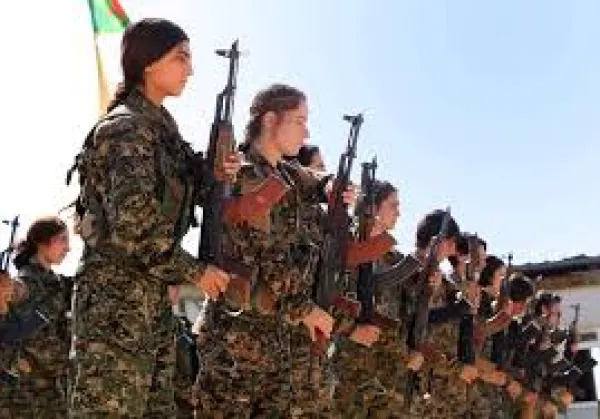
If reports are true that the Central Intelligence Agency (CIA) is arming Kurdish forces in Iraq as part of efforts to destabilize Iran, history is about to repeat itself—yet again. For over a century, the Kurds, the largest stateless people on earth, have been manipulated as instruments of foreign powers, promised support when useful, abandoned when convenient. The pattern is brutal, predictable, and morally indefensible: Kurdish lives and ambitions sacrificed at the altar of imperial strategy.
The story is old. After World War I, the Treaty of Sèvres envisioned a Kurdish state in eastern Anatolia. Within a few short years, that promise was shredded. Mustafa Kemal Atatürk rose, the Treaty of Lausanne erased Kurdish independence from the map, and the Kurds were scattered among Turkey, Iraq, Syria, and Iran. Western powers, concerned with “regional stability,” placed diplomatic convenience above Kurdish self-determination—and the pattern was set.
Colonial powers perfected this game. The French Mandate for Syria and Lebanon encouraged Kurdish refugees from Turkey to settle in northeastern Syria—not out of altruism, but as a tool to counter Arab nationalist movements. Kurds were useful, expendable, and ultimately, invisible in the calculations of empire.
The Cold War was no different. In the 1970s, Mustafa Barzani’s Kurdish forces in Iraq received funding, weapons, and training from the CIA, Iran, and Israel—not to establish Kurdish sovereignty, but to weaken a government aligned with the Soviet Union. When politics shifted, the allies vanished. The 1975 Algiers Agreement ended U.S. and Iranian support overnight, leaving the Kurds to face brutal retaliation. Once again, Kurdish dreams collided with the cold arithmetic of empire.
After the 1991 Gulf War, Kurdish uprisings were encouraged by the United States—then crushed by Saddam Hussein’s forces. Hundreds of thousands were displaced, and only belated intervention via Operation Provide Comfort created a safe zone. The lesson was clear: Kurdish populations are encouraged to fight, but protection is always contingent.
The 2003 Iraq War showed the same logic in action. Peshmerga fighters were indispensable allies of the U.S. in toppling Saddam Hussein, consolidating their autonomy in northern Iraq. Yet Western powers never seriously supported independence, wary of upsetting Turkey or Iran. Kurdish ambition, again, was subordinated to imperial calculation.
In Syria, the pattern persists. The People’s Protection Units fought valiantly against ISIS with American support, only to be abandoned in 2019 when U.S. troops withdrew, leaving them vulnerable to Turkish assault. The message was unmistakable: Kurdish lives matter only when they serve Western strategy.
This history is not incidental—it is instructive. Time and again, Kurdish forces are enlisted as tactical instruments, then discarded when they are no longer convenient. If the CIA is indeed arming Kurdish factions against Iran, it is not empowering the Kurds—it is using them. It is a cynical repetition of past betrayals, a maneuver designed to destabilize, not liberate.
The Kurds are trapped in a cruel cycle. Their pursuit of autonomy is continually subordinated to the whims of empires, who promise support but deliver abandonment. Each new alliance is a gamble with their survival, each foreign partnership a potential betrayal. For the Kurds, history is a ledger of broken promises, strategic manipulation, and recurring suffering.
The lesson is stark: Kurdish liberation cannot be outsourced to foreign powers. Any hope of self-determination must be rooted in Kurdish agency, not the fleeting interests of outsiders. The latest reports of CIA involvement in Iran are yet another warning—one more chapter in the tragic, relentless story of a people repeatedly used and abandoned by the world’s great powers.
Contact Information
Nader Rahimi
Email:nrahimi@bu.edu